 Chicken · curry
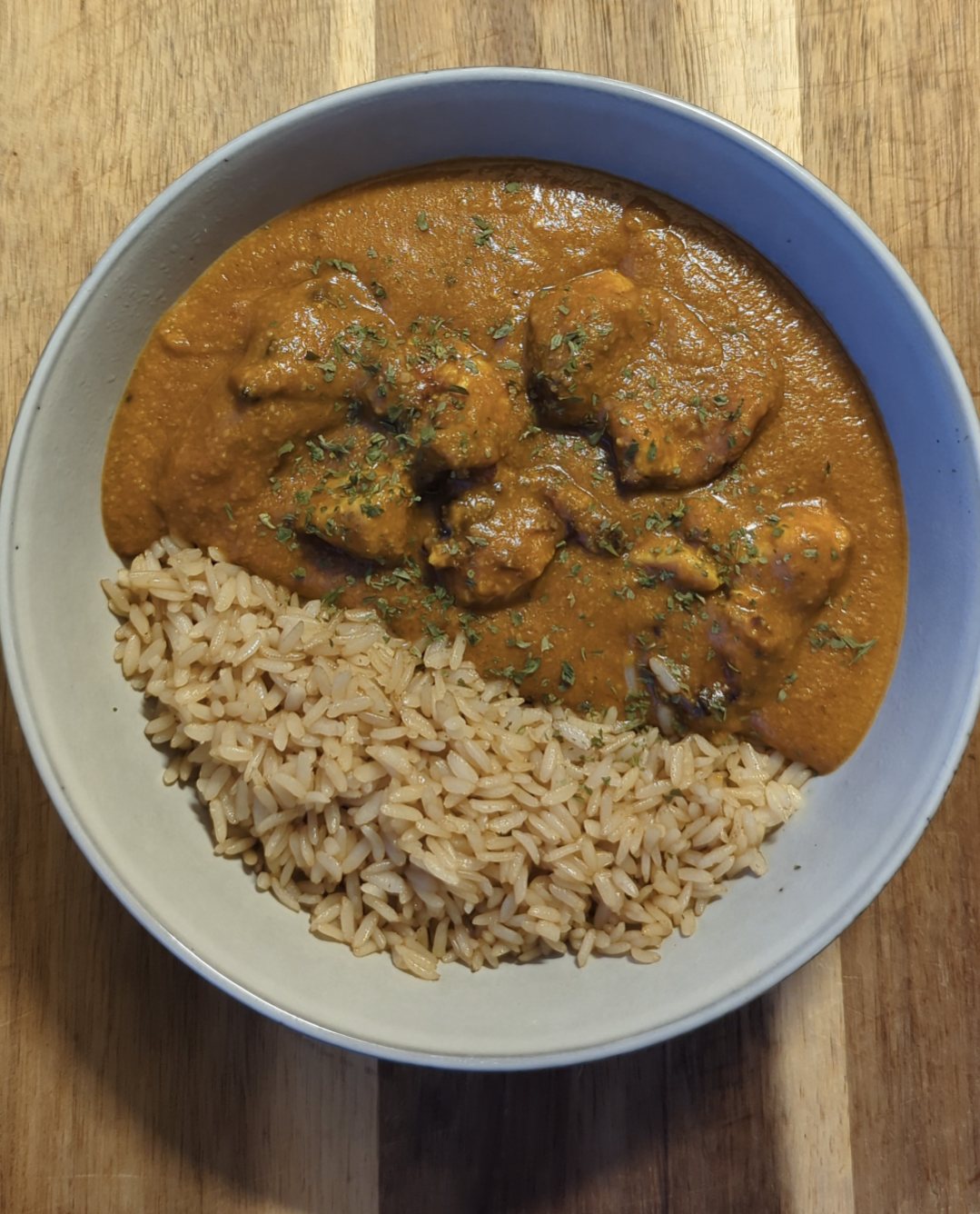
Butter Chicken
Butter chicken made at home usually comes out tasting a bit flat — not wrong exactly, just thinner and less interesting than the version you were hoping for. It is almost never the recipe's fault. There are three things that make the difference, and most recipes mention none of them.
This is a rich curry rather than a hot one, which is the whole point of it.
Prefer to watch? The video's here.
Ingredients
- For The Marinade
- 2chicken breasts
- 3 tbspGreek yoghurt (any plain yoghurt works)
- 1 tspground turmeric
- 1 tspground cumin
- 1 tspground coriander
- 1 tspminced garlic
- 1 tspsalt
- —black pepper
- ½lemon, juiced
- For The Sauce
- 100mlneutral oil
- 1 tspeach chilli powder, ground cumin, ground coriander, black pepper and fenugreek seeds
- 2 tspgaram masala
- 3cardamom pods
- 3red onions, sliced
- 1 tbspminced garlic
- 1 tbspminced ginger
- 200gtomato purée
- 1 tinevaporated milk (410g)
- 100gbutter
- —kasuri methi (dried fenugreek leaves), to finish
- —lemon juice, honey and salt, to taste
Method
Marinate the chicken, and give it time. Combine the yoghurt with the turmeric, cumin, coriander, garlic, salt, pepper and lemon juice, then coat the breasts thoroughly. Twenty minutes will do something. Overnight does considerably more, and that is what I would recommend if you can plan that far ahead.
Two things happen while it sits. The yoghurt tenderises the surface of the meat, and the spices work their way into it rather than sitting on the outside. Skip this step and you are seasoning a sauce rather than making a curry.
Air fry at 180°C — eight minutes, flip, then six more. You are looking for proper colour, edges catching, darker than feels comfortable.
This is the step the whole dish turns on. In a restaurant that char comes from a tandoor, and it is most of what makes restaurant curry taste the way it does. At home an air fryer gets you remarkably close, with no grill needed and no hob ring taken up. Colour is flavour here exactly as it is on a steak — a pale piece of chicken dropped into a sauce contributes almost nothing.
Check it is cooked through: 75°C in the thickest part.
Keep whatever is left in the basket. Those juices go into the sauce later, for the same reason you would never waste the browned residue stuck to a pan.
Bloom the spices, starting cold. All the ground spices and the cardamom pods go into a small pan first, then pour the oil over them and bring it up to a gentle simmer. As soon as it is simmering and smelling wonderful, take it off the heat.
Most recipes have you heat the oil first and drop the spices into it, and that does work — but it gives you about ninety seconds before they catch and turn bitter. Starting them cold and bringing everything up together is gentler and far more forgiving: the spices warm with the oil rather than hitting it, and you get a visible signal to stop rather than a timer to race against.
Blooming matters more than it sounds. Spices stirred into a liquid stay muted; spices warmed through fat come alive. It is the one habit that will improve every curry you make after this one.
Sweat the onions properly. A large heavy pan, a little oil, medium-low heat, and the sliced red onions cooked slowly until completely soft and translucent — ten to twelve minutes. Do not rush this.
This is the foundation of the sauce. Onions cooked soft break down their own sugars and give you a sweet, mellow base underneath the spice. Onions rushed over high heat give you something sharper and thinner at the end, and no amount of adjusting later will fix it.
Garlic and ginger in for two minutes, stirring, until fragrant.
Tomato purée in, over a high heat. Let it catch. Two minutes or so, stirring just enough to stop it burning outright, until it darkens and starts sticking to the base of the pan. Purée straight from the tin tastes tinny and sharp. High heat cooks that off, and more importantly it builds a layer of caramelised tomato on the bottom of the pan — which is the whole reason for doing it this way.
Evaporated milk in, heat down to medium. Scrape every caramelised bit off the base of the pan as you stir; all of that is flavour.
Evaporated milk rather than cream is a deliberate choice. It is milk with most of the water removed, so you get the richness without as much fat — and because it has already been heat-treated it is far more stable in an acidic tomato sauce, where cream can split on you. It also lives in a cupboard and costs very little.
Bloomed spices in, stirred through, along with the juices from the air fryer basket. Then simmer gently for fifteen minutes until rich and thick.
Blend it smooth. Fish out the cardamom pods first, then a hand blender until completely silky. This is what gives butter chicken its texture — a sauce you could pour.
Butter in, off the boil. All 100g, stirred through until melted and incorporated. That is what gives the sauce its gloss and its final richness.
Then the kasuri methi, crushed between your palms over the pan.
There is fenugreek in this twice, and the two forms are doing different jobs. The seeds went into the bloom at the start, for depth. The dried leaves go in now, for aroma. That smell is the thing you have tasted in restaurant curry and never been able to name. Any Asian grocer will have it for about a pound a bag, and it keeps for ages.
Balance it. Lemon juice for acidity, honey for sweetness, salt until it tastes alive. Stir the honey in off the heat and go lightly — it is sweeter than sugar and it carries its own flavour, which is the reason to use it. Taste and adjust until it sits right — rich, spiced, slightly sweet, with a bright finish.
This is the part where your own palate takes over, and it is worth taking seriously. A good curry has layers: heat from the spices, richness from the butter and milk, sweetness from the onions, and brightness from the lemon. Keep tasting until every one of those is doing its job.
Chicken back in, folded through gently, and served with rice.
It is better the next day, as the spices keep developing. The sauce freezes well for up to three months — this quantity makes more than two breasts need, so freeze the extra and you have most of a dinner already waiting.