 Chicken · pan technique
Chicken Breast That Isn't Dry
Dry chicken breast isn't a recipe problem. It's a shape problem, and once you see it you can't unsee it.
A chicken breast is thick at one end and thin at the other. Cook it as it comes and you're forced into a choice: pull it when the thin end is right and the thick end isn't safe, or cook until the thick end is done and the thin end has been dry for several minutes. Nobody sensible undercooks chicken, so everyone takes the dry option. That's why dry chicken breast is so common — it isn't carelessness, it's the shape making the decision for you.
Butterfly it and the choice disappears. And it's faster than baking one whole.
Ingredients
- 1chicken breast
- 1 tspoil, for frying
- 1 tspbutter, for basting
- —fine sea salt and black pepper
Method
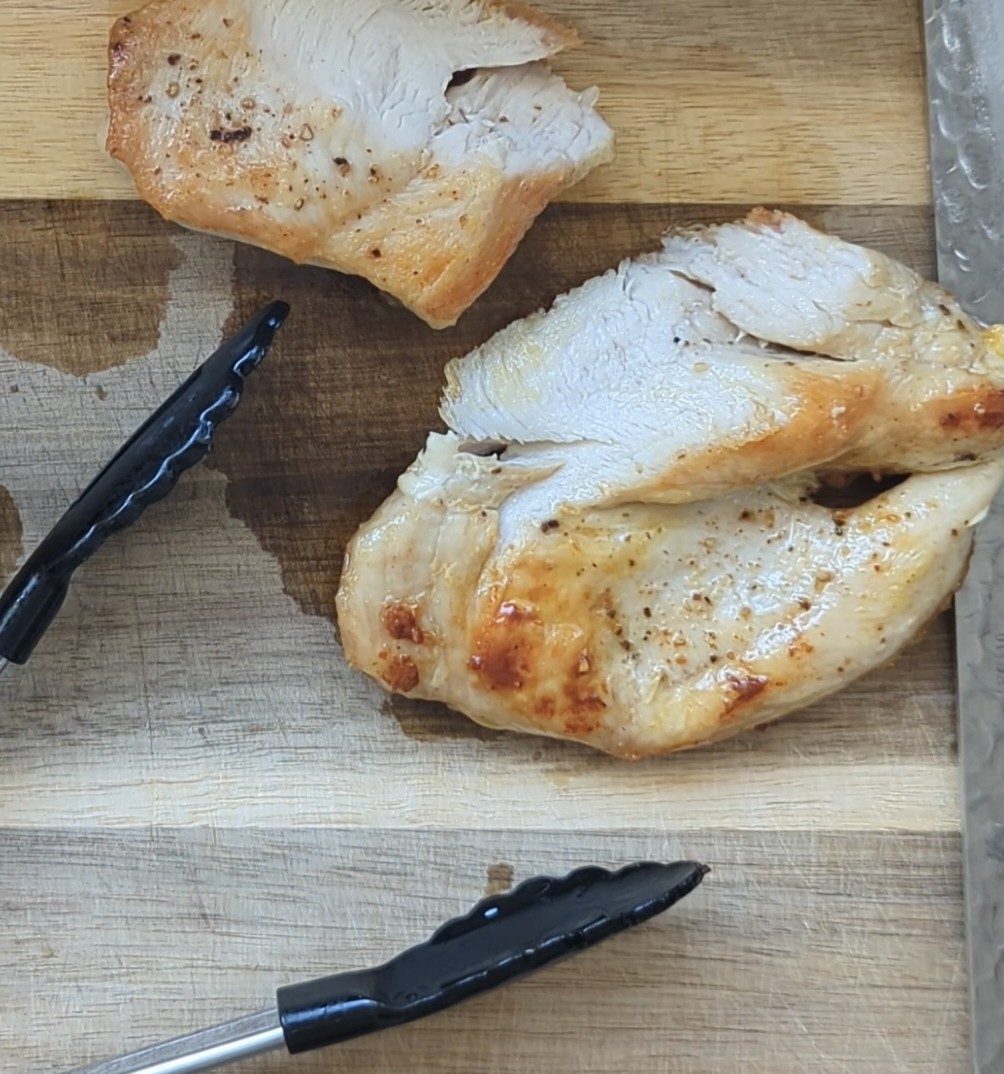
Butterfly it. Lay the breast flat with your hand on top, and cut horizontally through the thick side almost to the edge, then open it out like a book. Even thickness, even cooking.
Dry it and season it. Pat the surface completely dry — moisture steams and blocks browning, and colour is where a lot of the flavour lives. Season, and if you have the time, do it half an hour ahead. That's a dry brine: the salt draws moisture out, dissolves into it, and the meat reabsorbs it seasoned all the way through rather than only on the outside. It also leaves a drier surface to sear. Thirty minutes is enough to notice the difference.
Sear and leave it alone. Pan over medium-high, oil in, chicken down away from you. Then don't touch it for six minutes. Don't move it, don't lift it to check. Colour needs uninterrupted contact with the pan, and every time you lift it you interrupt the crust forming.
Flip and drop the heat. Turn it over, bring the heat down to medium, and give it five minutes on the second side. The first side needed aggression for the crust; the second needs to cook through without hardening.
Baste for the last minute. Add butter, tilt the pan, and spoon it over continuously. It adds flavour and carries heat gently over the surface, which is exactly what you want at this stage.
Check it properly. Press the thickest part — it should feel firm with a slight give, not squashy and not solid. If you have a probe, use it: chicken needs to reach 75°C, checked at the thickest point rather than the edge. A thermometer costs about ten pounds and takes all the guessing out of this.
Rest for six minutes, then carve against the grain. Look for the direction the fibres run and cut across them — it shortens them and makes every slice more tender. It's a free improvement most people never make.