 Dessert · pâtisserie
Chocolate Fondant
This is the dessert people are most frightened of, and the fear is reasonable — it lives or dies on timing, and the gap between a molten centre and a chocolate pudding is a couple of minutes.
But there's a trick restaurants use that almost nobody mentions at home: the batter is made ahead and baked from cold. Nobody is whisking eggs to order on a Saturday night. It takes the pressure out of the whole thing, and it makes the timing more forgiving.
Ingredients
- For the ramekins
- 60gmelted butter
- —cocoa powder
- For the fondants
- 165gunsalted butter
- 165gdark chocolate (70%)
- 5small eggs
- 120gcaster sugar
- 90gplain flour
- pinchsalt
Method
Prepare the ramekins properly, and don't rush it. More fondants are lost at this step than in the oven. Brush them with melted butter using upward strokes — the direction genuinely matters, because you're giving the fondant a clear path to climb as it rises and to release when you turn it out. Then coat the inside with cocoa, turning the ramekin in a circular motion so it reaches everywhere, and tip out the excess.
Cocoa rather than flour, because flour leaves a pale jacket on a dark pudding.
Melt the chocolate and butter gently over a bain-marie. Chocolate splits if you hurry it, and a bain-marie keeps the heat indirect so it can't catch on the base of the pan. When it's smooth and fully combined, set it aside to cool slightly. If it goes into the eggs hot it will start to cook them.
Whisk the eggs and sugar until doubled in size and pale. This is where the lift comes from. There's no raising agent in a fondant, so every bit of air in the finished pudding is air you put in at this stage. Take it further than you think — you want it visibly aerated, not just mixed.
Add the chocolate in thirds, folding gently after each addition. Thirds rather than all at once for a specific reason: melted chocolate is heavy and it knocks the air straight out of an aerated mixture. Adding it gradually lets you combine the two with the least possible loss.
Fold in the flour and salt, and stop the moment it's combined. Overworking now costs you the tender texture you're baking for.
Fill the ramekins almost to the top, leaving a couple of centimetres.
Then chill them. You can bake straight away, but the fridge is the step worth taking. Cold batter gives you a wider window between set edges and a molten middle, which is exactly where the difficulty lies. An hour is enough; overnight is fine.
Bake at 180°C in a properly preheated oven for sixteen minutes.
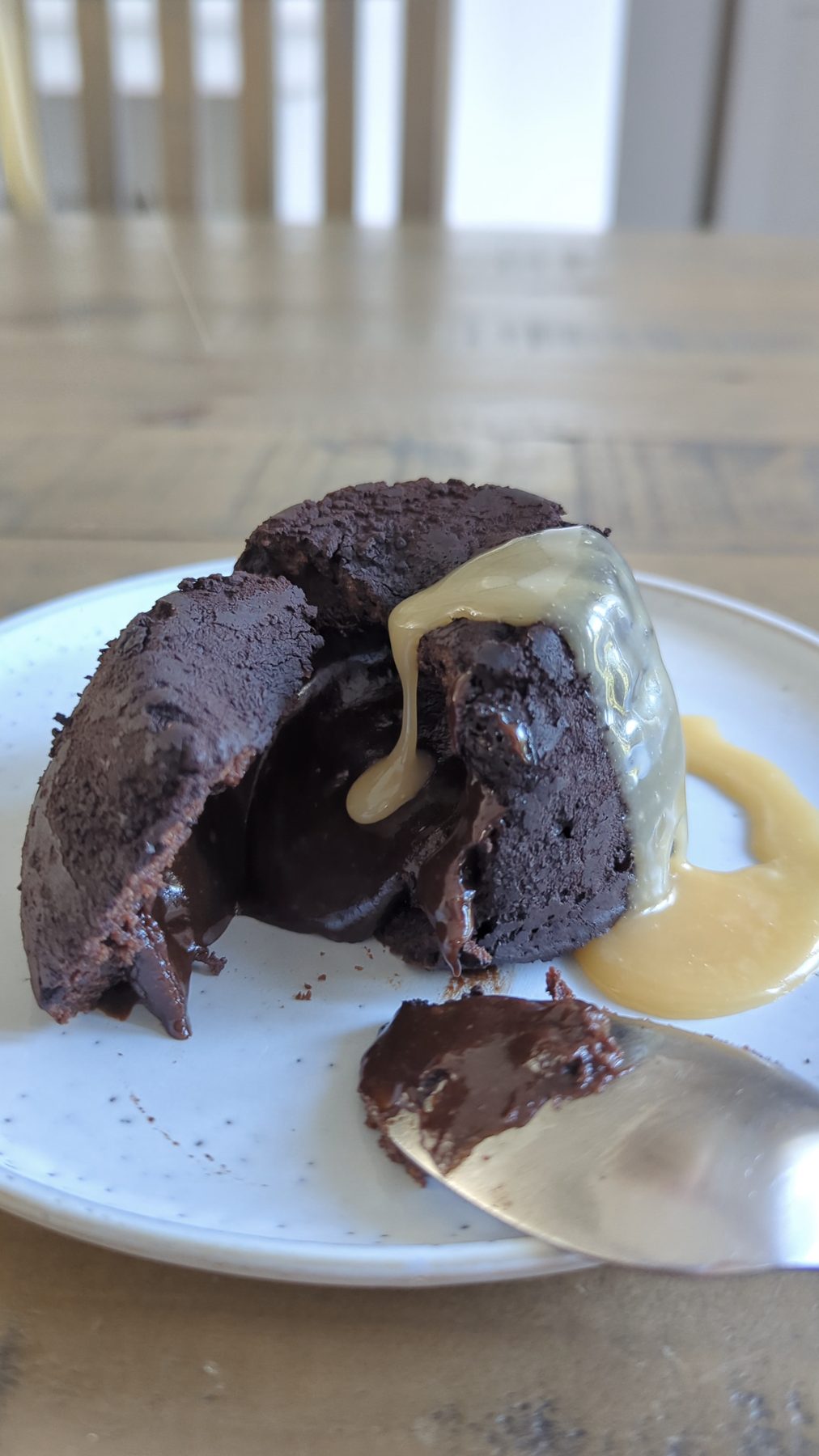
Then trust your eyes over the clock, because ovens vary and mine isn't yours. Edges cake, middle wobble. The outside should look set and risen while the very centre still moves when you nudge the tray. If it looks too wet, give it longer — an underdone fondant is soup, and unlike most things in baking you can simply put it back.
Let it set for one minute out of the oven. It needs that moment to hold itself together before being moved.
Turn out onto a plate. If it resists, run the back of a knife around the rim to release the edge before you invert it.
Serve immediately, while the middle is still molten. Salted caramel alongside is what I do — the light, buttery version rather than a dark amber one, because it plays against the bitterness of 70% chocolate rather than competing with it.