 Pasta · technique
Fresh Pasta Without a Machine
Two ingredients and a rolling pin. No machine, no attachment, no special equipment — and the dough tells you what it needs if you know what to listen for. The only thing a pasta machine really buys you is speed.
Ingredients
- 240g00 flour (plain flour works)
- 3large eggs
- 1 tbspolive oil
- 1 tspsalt
- —plenty of salt for the cooking water
Method
Build the well properly. Tip the flour onto a board and make a well in the middle — a real one, with walls high enough to hold liquid. Crack the eggs into the centre.
Add the oil and salt to the eggs, take a fork and beat them where they sit, then start drawing flour in from the inside edge a little at a time. Work slowly. The temptation is to collapse the whole thing together at once, but if the walls break before the eggs have thickened you'll be chasing egg across the board and the floor.
When the mixture is too thick to move with a fork, bring it together with your hands into a rough ball. It will be shaggy and untidy, and that's exactly right — don't chase smooth yet. Flatten it into a disc, wrap it, and leave it for thirty minutes.
That first rest is doing real work. Flour needs time to hydrate, and gluten that's just been worked is tight and resistant. Come back after half an hour and the same dough that fought you will have relaxed into something workable.
Knead until it tells you. Lightly flour the surface and work the dough. There's no set time for this. It starts rough and uneven and gradually turns smooth and elastic, and there's a point where it stops feeling like something you're forcing and starts pushing back gently against your hands. Press it and the dent should spring back slowly.
Wrap it again and rest it for an hour, or better still overnight in the fridge. Long rests make rolling dramatically easier, and an overnight dough is noticeably more relaxed under the pin. If you can plan a day ahead, do.
Laminate before you roll. Roll the dough out, fold it over itself, and roll again. Three times. Lamination aligns the gluten and gives you an even sheet instead of one that's thick in the middle and thin at the edges — it's what a machine achieves through repeated passes, and you can do it by hand in a couple of minutes.
Then roll it out properly. Work from the centre outwards and turn the sheet regularly rather than only rolling in one direction. Keep the shape square as you go, because a sheet that goes wonky early only gets harder to correct as it thins. Roll until you can see the shadow of your hand through it.
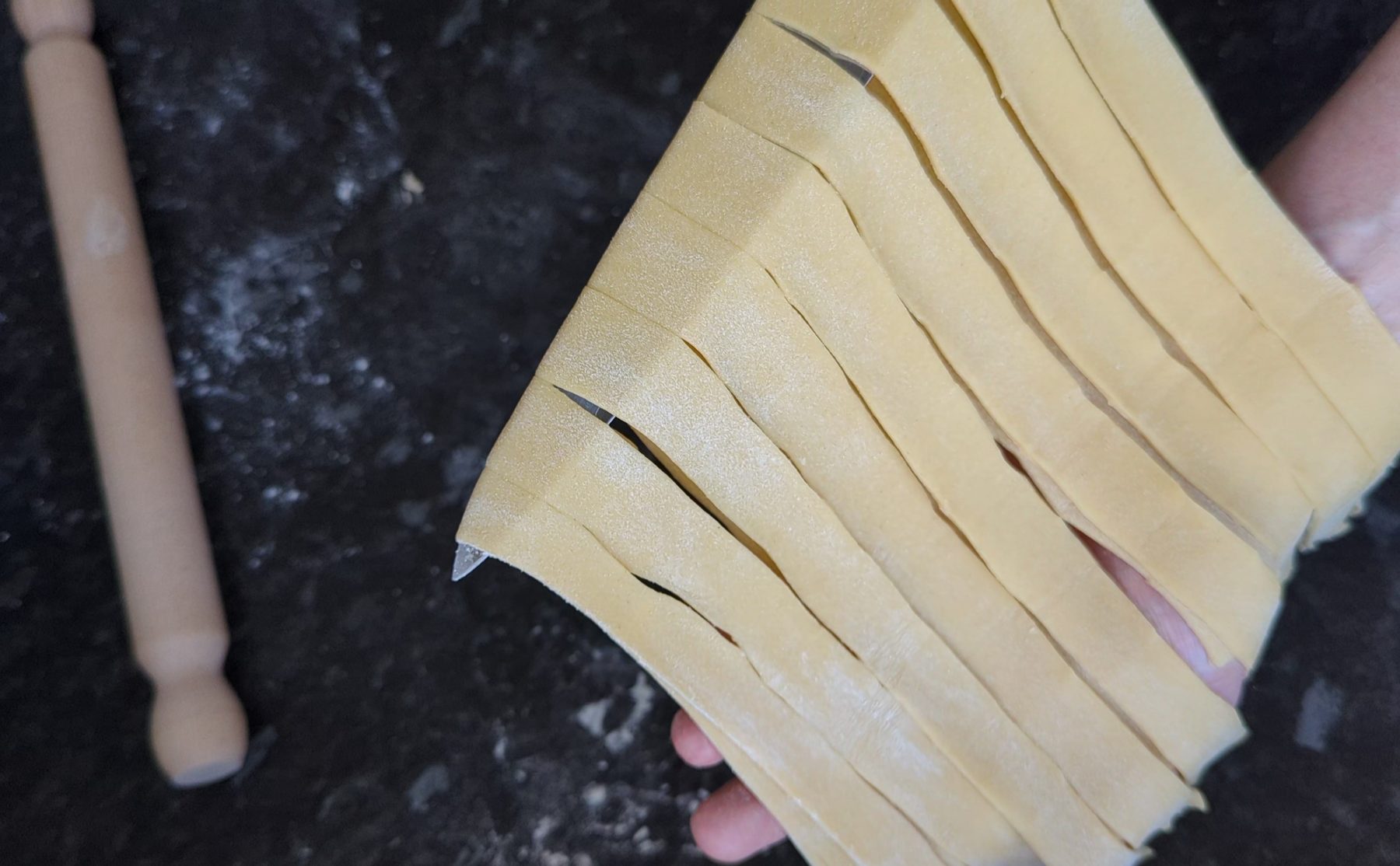
Cut. Flour the sheet lightly, then fold it over itself towards the centre from both sides. Cut across the folded dough into strips with a knife, then lift them from the middle and let them unfurl.
Cook and finish in the sauce. Blanch in heavily salted boiling water — fresh pasta takes a fraction of the time dried does, so stay with it. Then move it straight into the sauce to finish.
This last part is the bit most home cooking skips, and it matters more than anything else on the plate. Pasta finished in the pan absorbs the sauce rather than sitting under it. Add a ladle of the starchy cooking water as you go: it thickens the sauce and helps it cling, and it's the difference between a glossy, properly dressed plate and a dry one with a puddle underneath.