 Beef · pan technique
Hanger Steak with Diane Mushroom Pan Sauce
Hanger steak was known as the butcher's cut because butchers kept it back rather than sell it. It has more flavour than ribeye at a fraction of the price, and almost nobody cooks it at home — partly because it looks like it needs handling, and it does. Twenty minutes of attention and a bit of knife work, and you have a better steak than most people order out.
My Diane skips the brandy. No flambé, nothing to catch out a home cook, and the mushrooms and Worcestershire carry it perfectly well without.
Ingredients
- 450ghanger steak
- 1 tbspneutral oil (rapeseed or vegetable)
- —fine sea salt and black pepper
- 1 knobbutter, for basting
- 1 sprigrosemary
- For the sauce
- 1shallot, finely chopped
- 1 clovegarlic, finely chopped
- 4chestnut mushrooms, sliced
- 100mlbeef or chicken stock
- 1 tspDijon mustard
- 1 tbspWorcestershire sauce
- 75mldouble cream
- 30gcold unsalted butter, cubed
- —flaky sea salt, to finish
Method
Trim it first. This is the step that decides whether the steak is a pleasure or a chore to eat. Hanger has a thick white sinew running down its centre and a lighter grey sinew threaded through the meat around it. Take out both — the white one obviously, but chase the grey as well. Sinew doesn't soften as it cooks, it contracts. Under heat it tightens and pulls on the meat around it, and that tension is what people are describing when they call a cut chewy.
Lay the steak flat, angle the blade towards the sinew rather than into the meat, and work in long strokes. You'll lose a little meat doing it properly. That's the right trade.
Dry it, then season it heavily. Pat the surface completely dry — a wet steak steams before it browns, and you'll wait a long time for colour that never arrives. Then season more than feels polite. Most home cooking is under-seasoned at this point because raw meat under that much salt looks alarming. It isn't.
Leave it for around thirty minutes. The salt draws moisture to the surface, dissolves into it, and the meat reabsorbs it seasoned. That puts flavour into the steak rather than on it, and leaves you a drier surface to sear.
Get the pan properly hot. High heat, and give it longer than you think. Oil in, then the steak down away from you. It should announce itself the moment it lands. If it goes on quietly the pan wasn't ready, and you've already lost the crust.
Sear for two minutes until deeply golden, flip, and give the other side two minutes. Hanger is an awkward, irregular shape, so use tongs to press the top edge and both ends against the pan as well. Then stand it on the cut side and turn the heat down to medium.
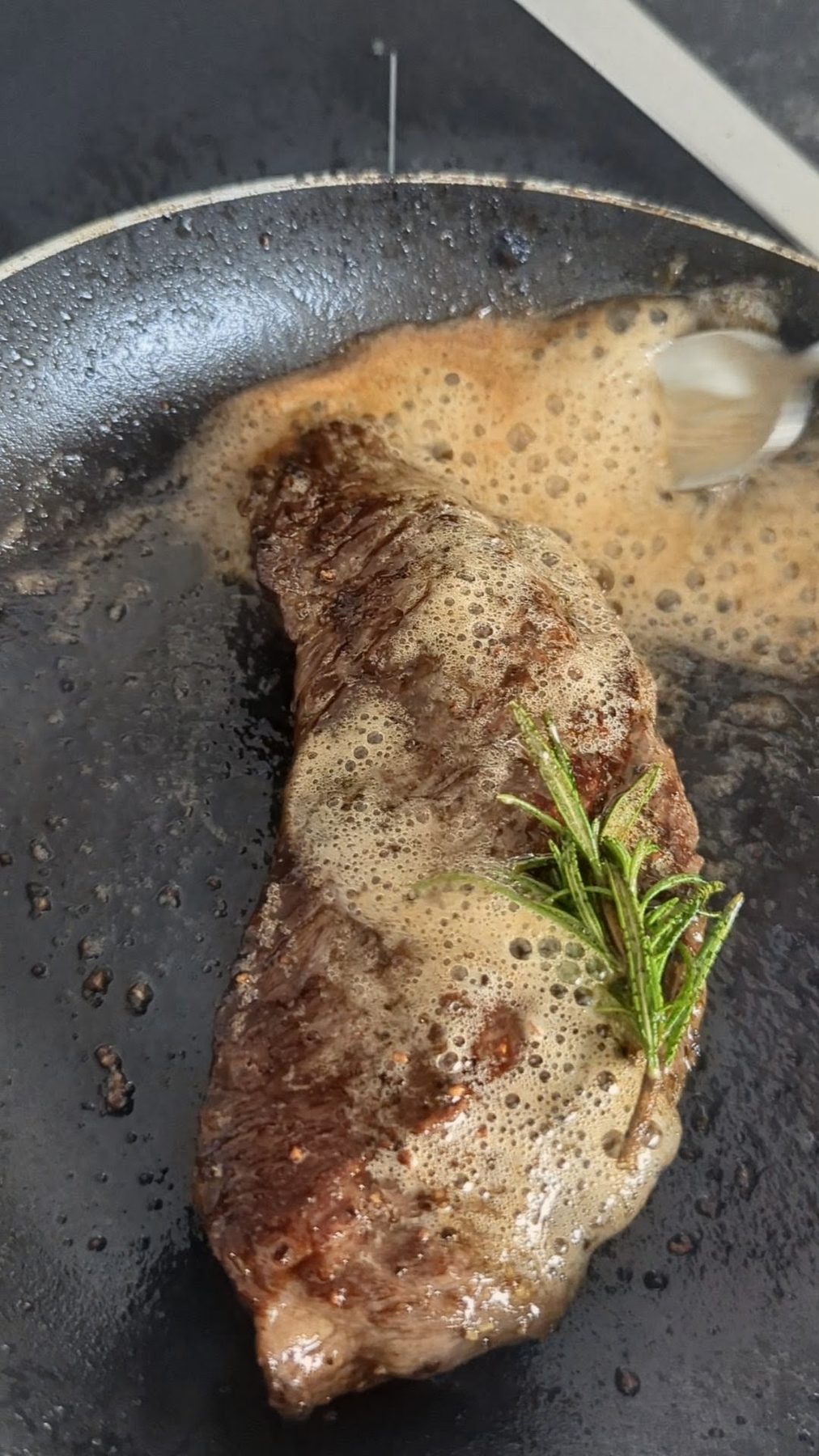
Baste. Add the butter and rosemary, tilt the pan so the butter gathers at one side, and spoon it over continuously for about two minutes. This isn't decoration. The foaming butter carries heat onto the surfaces the pan can't reach and drives the rosemary into the crust — you're cooking gently and flavouring at the same time.
Rest for six minutes. Not optional. Cutting a steak straight off the heat empties it onto the board, and everything you spent twelve minutes building runs away.
Make the sauce while it rests. Pour off all but a spoonful of fat and return the pan to medium heat. Sweat the shallot gently, then add the mushrooms and cook until the water they release has driven off — longer than you'd expect, and worth waiting for, because until it's gone they'll stew rather than brown. Add the garlic for thirty seconds only; it burns in a fraction of the time the mushrooms need, and burnt garlic turns a sauce bitter with no way back.
Stir in the Dijon and Worcestershire, then pour in the stock and scrape the base of the pan clean with a wooden spoon. Those browned bits are fond, and they're the most flavour-dense thing in your kitchen. You'll see the sauce take colour as they lift. Simmer until reduced by half.
Add the cream and reduce again, until it coats the back of a spoon. Then take the pan off the heat and add the cold butter a cube at a time, swirling until each disappears before the next goes in. This is monter au beurre, and it's the step that separates a restaurant sauce from a homemade one — off the heat matters, because butter added to a pan that's too hot splits rather than emulsifies, and you lose the gloss.
Carve against the grain. Look for the direction the muscle fibres run and cut across them. Hanger has a pronounced grain and getting this wrong turns a tender steak into hard work. Pour over any resting juices, then the sauce, and finish with flaky salt.
If a slice comes out rarer than you fancy, lay it back in the warm pan for a few seconds a side. It catches quickly, so don't wander off.