 Baking · dessert
Lemon Bars
Lemon bars go wrong in two places, and both of them are fixable. The filling sets grainy instead of silky, or the base goes soft underneath. Neither is your fault — they are both the result of advice most recipes give you.
There is no zest in this one. It is a deliberate choice: the juice alone gives you a cleaner, smoother set, and the zest, lovely as it is, leaves little flecks that change the texture.
Prefer to watch? The video's here.
Ingredients
- For The Shortbread Base
- 200gunsalted butter, softened
- 50gcaster sugar
- 50gdemerara sugar
- 300gplain flour
- For The Lemon Filling
- 225mllemon juice
- 375gcaster sugar
- 6eggs
- 50gplain flour
- To Finish
- —icing sugar, for dusting
Method
Line the tin and make the shortbread. A 9 inch square tin, lined with parchment. Work the softened butter into both sugars and the flour until it comes together, then press it into the tin in an even layer and prick it all over with a fork.
The demerara alongside the caster is deliberate. It brings a little caramel flavour and a slightly coarser, sandier texture, which is what you want underneath something this sharp. The fork holes let steam escape so the base stays flat instead of doming up into the filling.
Blind bake at 160°C fan for 25 to 30 minutes, until golden on top. Take it to properly golden rather than pale. This base is doing structural work and it gets a second spell in the oven once the filling goes on, so underbaking it now is how you end up with something soft underneath.
Only make the filling once the base is nearly done. Whisk the lemon juice, caster sugar, eggs and flour together smoothly rather than frothily, and do it in the last few minutes of the base's bake.
This is the step with a reason behind it that nobody mentions. Sugar draws moisture out of egg yolks, so a filling left standing goes grainy and sets with a slightly curdled texture. Mix it and use it. Whisking gently rather than hard also keeps the air out — air on top turns into a pale crust later.
Pour it straight onto the hot shortbread. Out of the oven, filling in, back into the oven. The base should still be properly hot when the filling hits it.
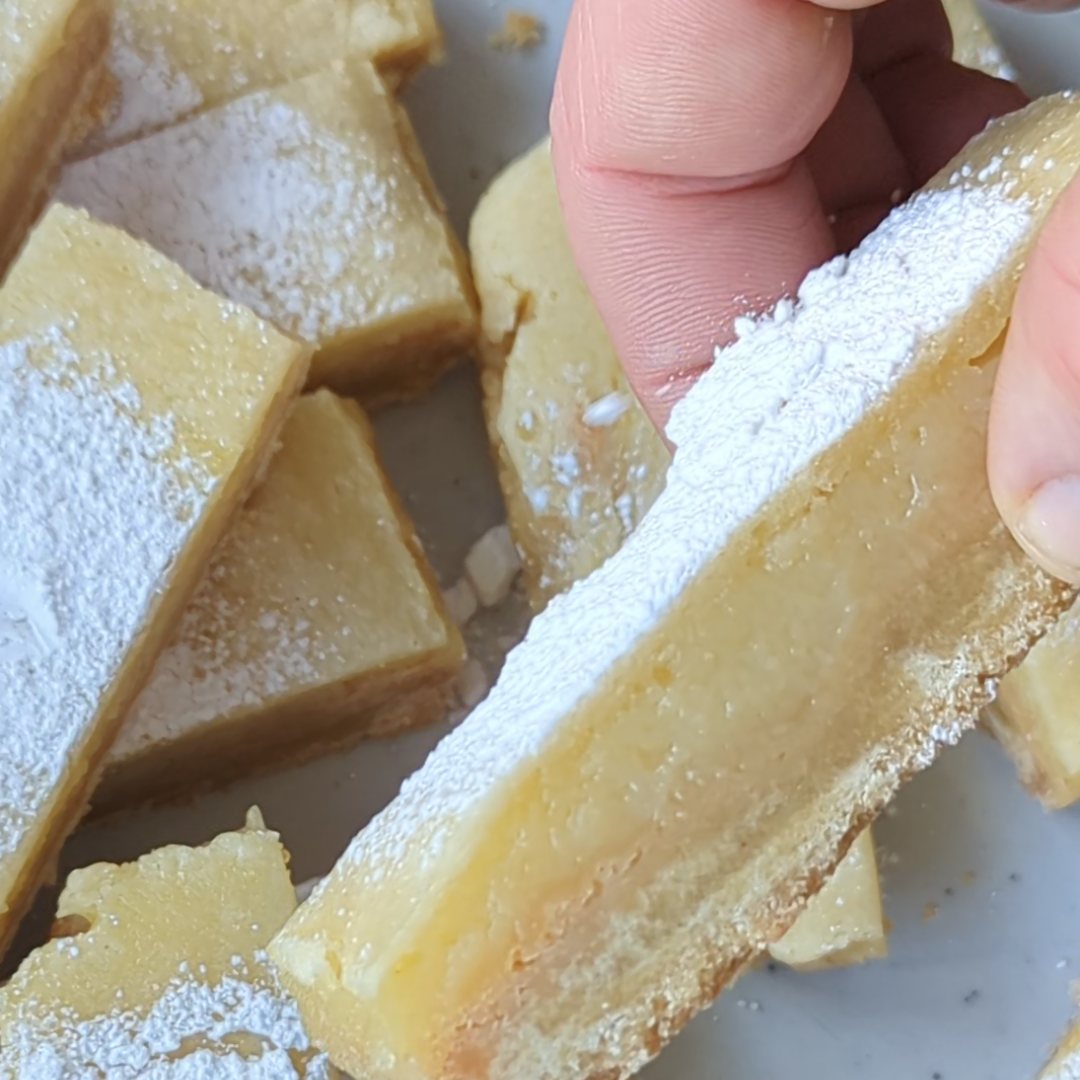
Pouring onto a hot base is what stops the soggy bottom. The two layers set as one thing. Let the base cool first — which is what most recipes tell you to do — and you get a damp seam of steam trapped between the shortbread and the lemon.
Twenty minutes at 160°C fan, until there is the faintest wobble left in the middle. Not firm. The faintest wobble. It carries on setting as it cools, and a filling baked until solid in the oven is a filling that has gone past silky by the time it is cold.
Dust with icing sugar while it is still hot. Straight out of the oven, over the whole tray. It melts into the surface and sets there, which means it is still visible when you come to cut — no second dusting needed.
Cool it slowly, then chill it properly. Two hours at room temperature first, then at least six hours in the fridge. Overnight is better. This is not optional: a warm lemon bar cuts like a landslide, and every bit of patience here shows up in the edges.
Cut with a hot knife, wiped between every slice. Run the blade under hot water and dry it, cut, wipe, repeat. That is the whole difference between a tray that looks homemade and one that looks like it came off a pastry section. Same filling, same base — just a clean edge.
Twelve bars from a 9 inch tin. They keep in the fridge for three or four days and the set only gets better on day two.