 Beef · slow braise
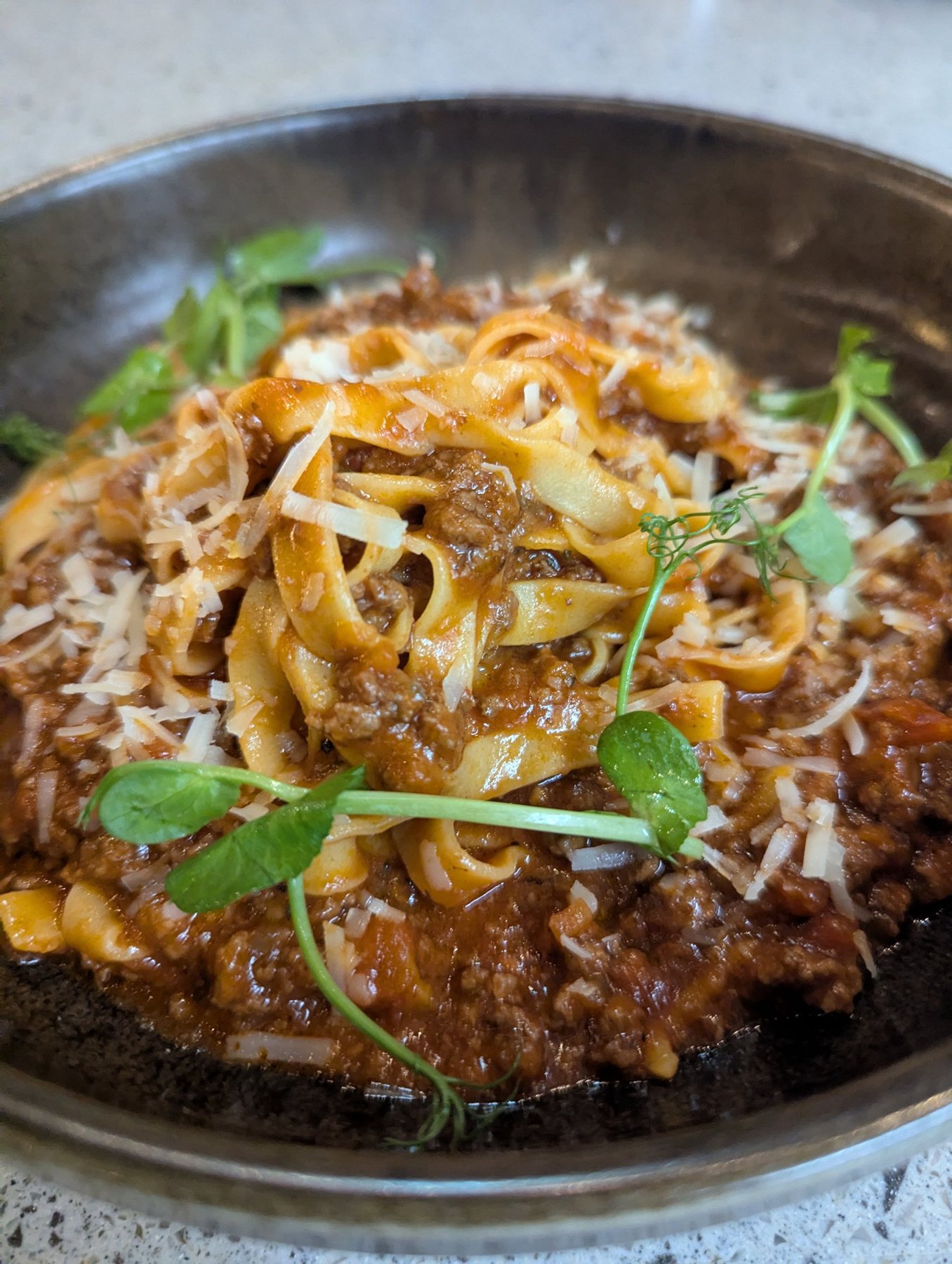
Bolognese with Pappardelle
A proper bolognese is a slow braise that happens to contain mince. It is not a quick weeknight sauce, and nearly everything that makes it taste the way it should happens in the two hours where you aren't really doing anything.
It also freezes beautifully, which is the argument for making the full quantity even if there are two of you. One afternoon, two dinners.
The video for this one is coming soon — new videos go up every other Thursday.
Ingredients
- 2onions, diced small
- 2carrots, diced small
- 3celery sticks, diced small
- 8 clovesgarlic, minced
- 4bay leaves
- 2 tspdried thyme
- 1kgbeef mince (10% fat)
- 200mlred wine
- 250mlwhole milk
- 2beef bouillon cubes
- 600mlpassata
- —balsamic vinegar, to taste (about 100ml)
- —salt and pepper
- —pappardelle, to serve
Method
Start with the soffritto, and give it time. Onion, carrot and celery, all diced small, sweated gently in a little oil. Season them now rather than at the end. You are not looking for colour here — just softness and sweetness. This is the base that everything else sits on, and if you rush it over high heat you get something sharper and thinner in the finished sauce. It is worth the fifteen minutes it asks for.
Once they have softened properly, add the garlic, bay leaves and dried thyme.
Then take all of it out of the pan. This step surprises people, and there are two good reasons for it. The mince needs a much higher heat than the vegetables can tolerate, so anything left in the pan will scorch while the meat is browning. And it clears the floor of the pan, which matters enormously for what happens next.
Brown the mince in batches, over high heat. This is the single step that decides how the finished sauce tastes. Season the first side, and once you have seasoned the second side, start breaking it up.
Batches are not fussiness. A crowded pan drops in temperature, and the meat then releases its moisture faster than the pan can evaporate it — so it sits in its own liquid and turns grey rather than brown. Give it room and it browns properly. Colour is flavour here exactly as it is on a steak, and grey mince makes a flat sauce no amount of simmering will rescue.
Deglaze with red wine between each batch. As each lot of mince comes out, pour in a splash of wine and scrape the base of the pan clean. All that stuck brown residue is concentrated flavour, and if you leave it there it will simply burn under the next batch. Doing this between batches rather than once at the end means you capture it while it is at its best rather than after it has caught.
Everything back in, over medium heat — meat and vegetables together.
Milk before tomato, and the order matters. Add the milk and let it simmer gently until it has mostly disappeared. Two things are going on: the milk tenderises the meat and rounds off the whole sauce, and it does that far better before any acid arrives. Put the tomato in first and you largely lose the effect.
Then the passata and the bouillon cubes, brought to a gentle simmer.
And now the part that cannot be shortened. Two hours, barely a bubble, an occasional stir whenever you pass the pan. You are not really cooking any more; you are waiting well. The mince softens, the sauce darkens, the liquid reduces, and everything that went in separately becomes one thing. There is no twenty-minute version of this, and anything claiming otherwise is a different dish.
What you are looking for at the end is a sauce thick enough that a spoon leaves a trail behind it, but still loose enough to coat pasta rather than sit on top of it.
Balsamic vinegar when it gets there — added gradually and tasted as you go. Two hours of long, slow cooking makes everything deep and rich, and a little acidity at the end lifts it back up — the same reason a squeeze of lemon works on anything fatty. Then season it properly, and taste as you go, because a sauce that has been cooking this long will have changed considerably since you last tried it.
Finish the pasta in the sauce. Not sauce spooned over the top — pappardelle straight into the pan with a ladle of its starchy cooking water, tossed until every ribbon is coated. The starch is what helps the sauce cling, and it is the difference between a properly dressed plate and a dry one with a puddle underneath it.