 Rice · seasonal
Courgette Risotto with Feta
Risotto isn't difficult. It's attentive — twenty minutes of standing near a pan. And you don't need to stir it constantly, whatever you've been told.
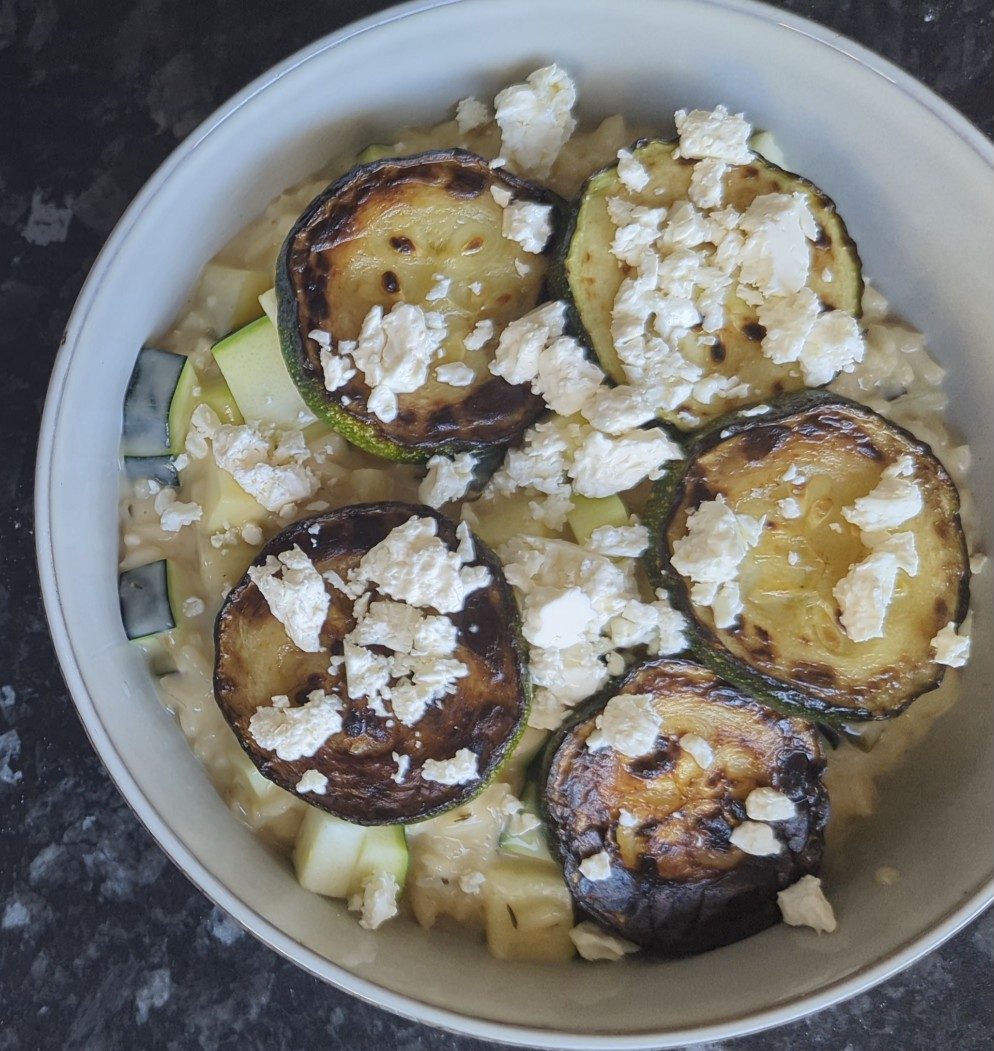
The courgette turns up three times here, doing three different jobs: melted into the base for depth, added late for freshness, and seared in rounds for the top. One ingredient, three textures.
These came out of my own garden, which is the best argument for growing courgettes — they arrive in quantities that force you to find good uses for them.
Ingredients
- 1onion, diced
- 3 clovesgarlic, diced
- 2 sprigsthyme, chopped
- 1courgette, cut into rounds
- 2courgettes, diced
- 200garborio rice
- 200mlwhite wine
- 800mlstock
- 100gbutter
- 100gparmesan, grated
- 50gfeta, crumbled
- —salt and pepper
Method
Sear the rounds first. Pat the courgette rounds dry and seal them in a hot pan until they've taken colour, then set them aside. Drying them matters — courgette is full of water, and a wet surface steams instead of caramelising. You want real colour on these, because that's flavour you can't get any other way, and they're going on top where people will see them.
Build the base gently. Sweat the onion until soft and sweet with no colour, then add the garlic and thyme.
Toast the rice, and listen for it. Add the arborio and stir it through the fat. After a minute or so the grains start to crackle against the base of the pan, and the edges turn translucent while the centres stay chalky white. That's the rice ready to take on liquid. Skipping this step is one reason risotto can taste flat. Season now with salt and pepper.
Wine in, and stir until it's absorbed. The alcohol cooks off and leaves acidity behind, which is what stops a dish this rich becoming heavy.
Add half the diced courgette. This batch is going in early on purpose. It'll break down completely and disappear into the base, which is flavour built into the risotto rather than sitting on top of it.
Then the stock, a ladle at a time. Add, stir, let it absorb, repeat. Here's where the myth gets in the way: you don't have to stir constantly. Stirring releases starch, which is what makes risotto creamy, but stirring often is plenty. What you actually need is to be there — watching the liquid level and topping up before the pan goes dry.
Mantecatura. When the rice is tender with the faintest resistance at its centre, take the pan off the heat completely. Add the parmesan and butter and beat it hard. This is the step that makes risotto creamy — not cream, this. Beating off the heat emulsifies the fat with the starch already released from the rice, and that's where the texture comes from.
Check it with the spoon test. Drag a spoon through the risotto in the pan and watch the channel it leaves. It should close slowly, in a gentle wave. Too fast and it's loose; if it stays open it's too tight and wants another ladle of stock.
Finish. Stir through the remaining diced courgette at the last moment so it keeps its bite and its fresh green flavour against the softer courgette in the base. Season again — always taste at the end.
Plate it and tap the base of the plate on the worktop. A finished risotto relaxes and settles into a slow wave rather than sitting in a heap. Rewarm the seared rounds briefly and arrange them on top, then crumble over the feta.
Feta rather than more parmesan, because salty and cold against warm rice does something hard cheese can't, and it belongs with courgette.