 Potatoes · side
Crispy Roast Potatoes
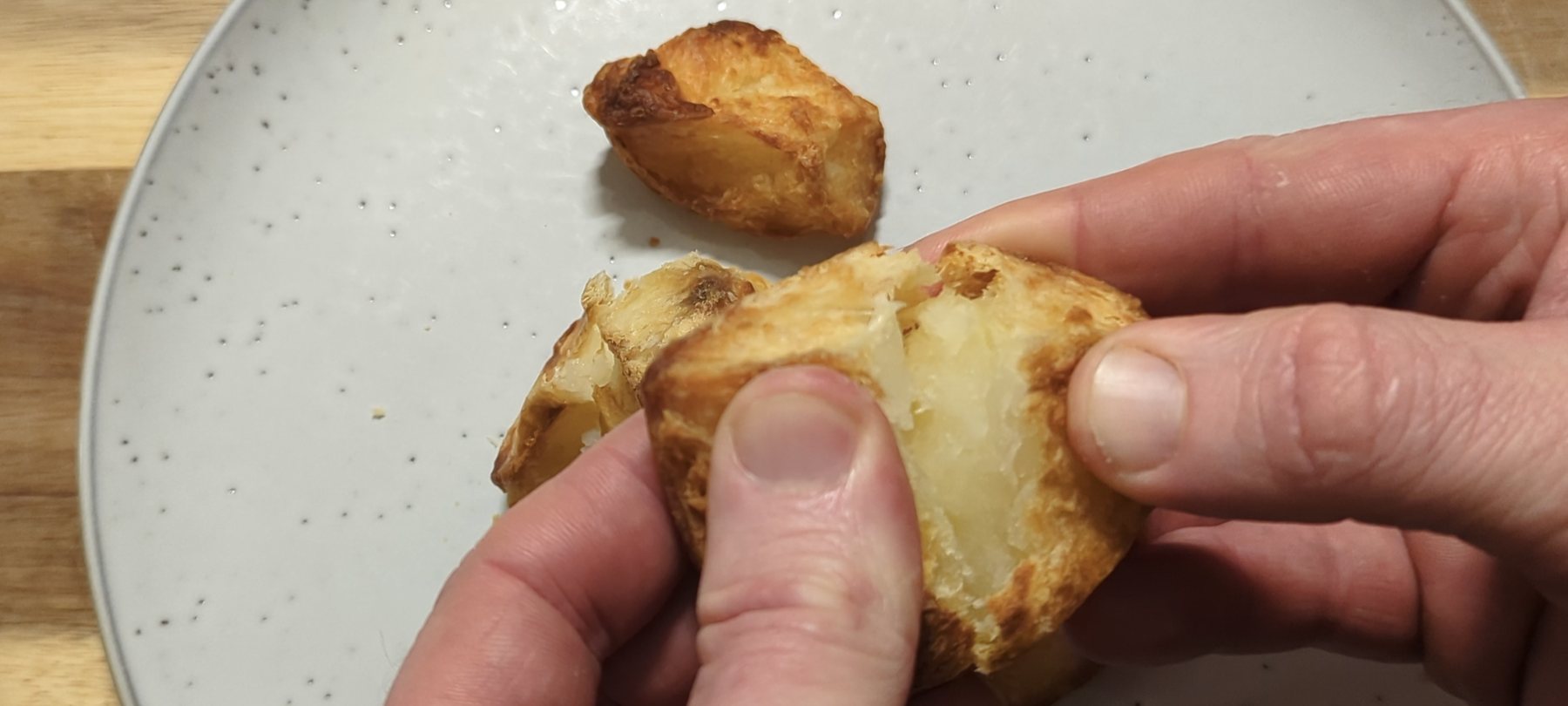
A good roast potato has a shell that shatters and a middle like a cloud. Most home versions get close and then fall down on one of three things, none of which are difficult — they just need knowing about.
None of this is fast. An hour in the oven, and the hour is the point.
Prefer to watch? The video's here.
Ingredients
- 2kgfloury potatoes, peeled (Maris Piper work well)
- —a few sprigs of rosemary
- 1bulb of garlic, cloves bashed
- —salt, for the water and for seasoning
- —black pepper
- —rendered pork fat, topped up with vegetable oil (enough to coat the tray generously)
Method
Start them in cold, seasoned water. Peel the potatoes and cut them into even pieces, then into a pan of cold water with rosemary, bashed garlic and a good amount of salt. Bring it up to the boil and give them about ten minutes.
Starting cold matters more than it sounds. Potatoes dropped into boiling water cook from the outside in, so the edges are collapsing while the middle is still raw. Brought up together, they cook evenly all the way through. And everything you put in that water goes into the potato rather than sitting on it — this is the only chance you get to season the inside.
Test with a knife, not a timer. A knife should slide into the middle with very little resistance, and the outside should feel like it is just beginning to give. That is the point to stop. Too firm and they will never rough up; too far and they fall apart in the pan.
Drain them, and let them steam dry. Tip the water out and leave them in the hot pan for a minute or two. You will see the steam come off them and the surfaces turn chalky and matt.
This is the step most people skip and it is the one that decides whether they go crisp. A wet potato going into hot fat spends its first ten minutes steaming itself rather than frying, and you never quite get that time back. Thirty seconds of patience here is worth more than anything you do later.
Lid on, and rough them up. Put the lid on the pan and shake it firmly a few times. You are looking for ragged, broken-up edges rather than smooth ones — a layer of fluffy, damaged surface all the way round.
All of that ragged surface is what turns into crust. A smooth potato has one flat face touching the tray; a roughed-up one has a hundred small edges, and every one of them crisps. This is where the shattering shell actually comes from.
Get the fat properly hot first. Rendered pork fat if you have it, topped up with vegetable oil, and enough of it to coat the tray generously. Rosemary and garlic in with it. Heat it in the oven until it is shimmering before the potatoes go anywhere near it.
A potato going into cold fat absorbs it and turns greasy. Into hot fat, the outside seals and starts crisping immediately. If you have roasted pork that day, the rendered fat is already paid for and it tastes of the thing it came from — but beef dripping, goose fat or plain vegetable oil all work.
Potatoes in, seasoned on top. Lay them into the hot fat in one layer with space between them, then salt and pepper the upward-facing side. Crowding the tray drops the temperature and they steam instead of roasting — two trays is better than one full one.
200°C fan (220°C conventional) for twenty minutes. Then turn, season, and repeat. Twice. Turn them over, season the new top, another twenty minutes. Turn again, and a final twenty. An hour in total.
Forty minutes gets you a good roast potato with one crisp side. An hour with two turns gets you one that is crisp the whole way round, because every face has had its own spell against the hot tray. Seasoning at each turn means the salt is on the surface that is about to crisp rather than buried underneath.
Out, and eat them fairly promptly. They are at their best within about ten minutes of coming out. Piled into a covered dish they steam themselves soft again, so if they have to wait, leave them uncovered somewhere warm.