 Sweet · sugar work
Salted Caramel
There are two ways to make caramel. The dry method is sugar alone in a pan — quick, but it colours unevenly and catches people out. This is the wet method, sugar with water, and the water buys you time: it dissolves the sugar before any of it begins to colour, so the whole pan moves through the stages together instead of burning at the edges while the middle is still white.
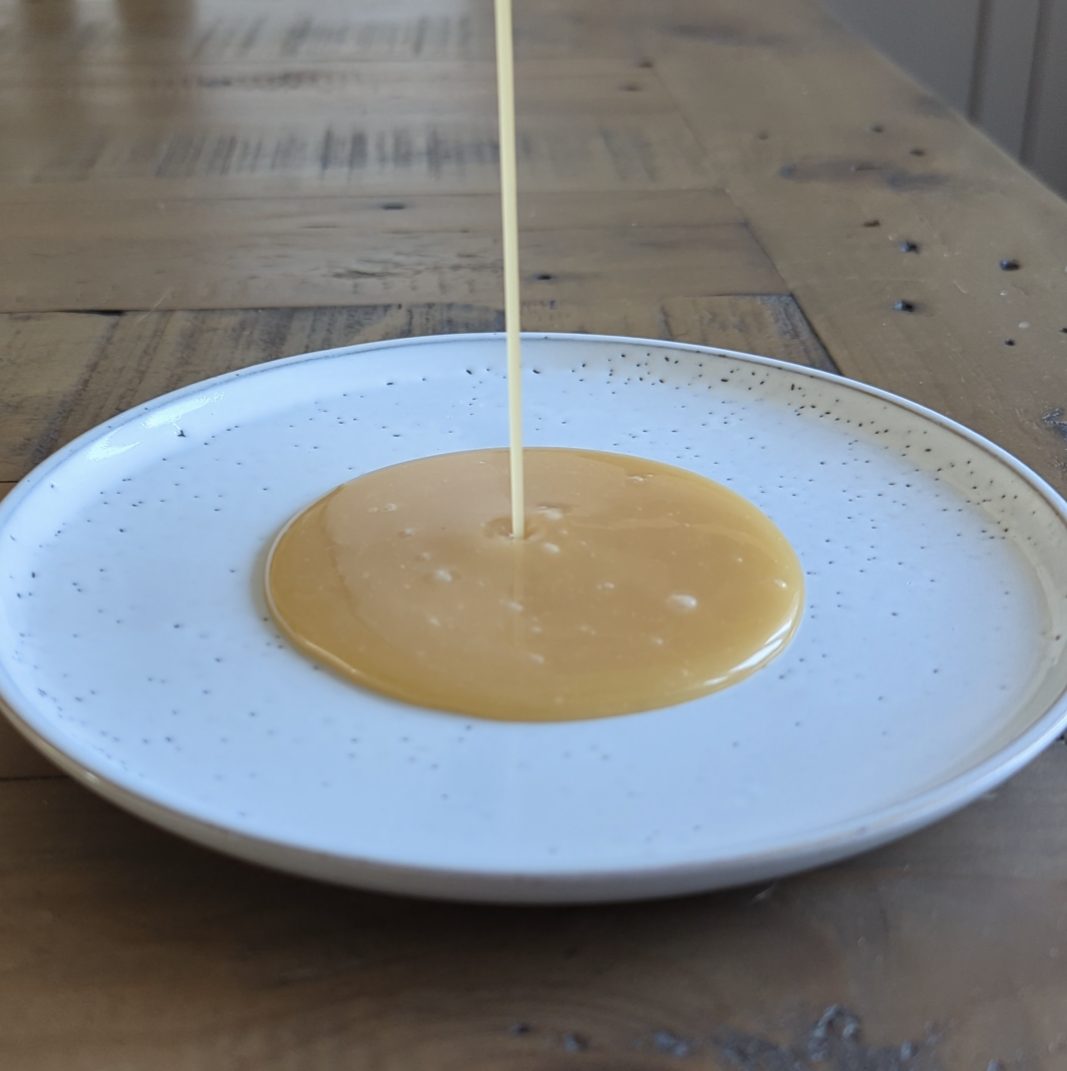
This is the light version, and it's the one my family prefers — buttery and toffee-sweet, closer to a Werther's than anything from a restaurant. The method below takes you to either.
Ingredients
- 200gcaster sugar (1 cup)
- 120mlwater (½ cup)
- 240mldouble cream (1 cup)
- 75gunsalted butter
- —flaky sea salt, to taste
Method
Sugar and water into a heavy pan over medium-high heat.
Swirl, don't stir. One rule and it matters: a spoon carries sugar crystals up the side of the pan, and those crystals seed the whole batch into grit. Swirling keeps everything moving without introducing anything to crystallise around. If you need to move it, lift the pan and tilt it.
Then watch. The water cooks off first, the sugar begins to bubble, and colour comes gradually from the edges inwards. This is the part people find difficult, and it isn't difficult so much as it asks you to stay at the pan. Around eight minutes gives you a light golden caramel. Around nine, it deepens to classic amber.
Both are correct. This is the thing nobody says about caramel: it isn't a recipe with a right answer, it's a dial, and where you stop changes what you've made. Light golden is buttery and toffee-sweet. Amber is deeper and more bittersweet, because caramelisation develops bitterness as it goes — and that bitterness is what stands up against dark chocolate or a rich dessert. Neither is better. It depends what you're making it for.
What you do need to know is that past amber it moves quickly. Burnt is about thirty seconds beyond perfect and there's no rescuing it. Decide where you're stopping before you start, and don't leave the pan.
Cream in, and stand back. At your chosen colour, pour in the cream and whisk it through. Cold cream hitting hot sugar erupts, and the steam is fierce. It'll seize and look wrong for a moment — keep whisking and it comes back together smooth.
Butter off the heat. Take the pan off the hob, add the butter, and whisk until glossy and completely smooth. Off the heat matters: butter added to a pan that's still hot can split rather than emulsify, and you want it silky.
Salt to taste, a pinch at a time. You're looking for the sweetness to arrive first and the salt to come just behind it. Flaky sea salt if you have it.
Into a jar. It thickens as it cools, so if it looks thin in the pan that's normal — judge it once it's cold. It keeps in the fridge for a couple of weeks. Good on ice cream, through brownies, alongside a chocolate fondant, or off a spoon at eleven at night.